What Are Quantum Computers Used For?
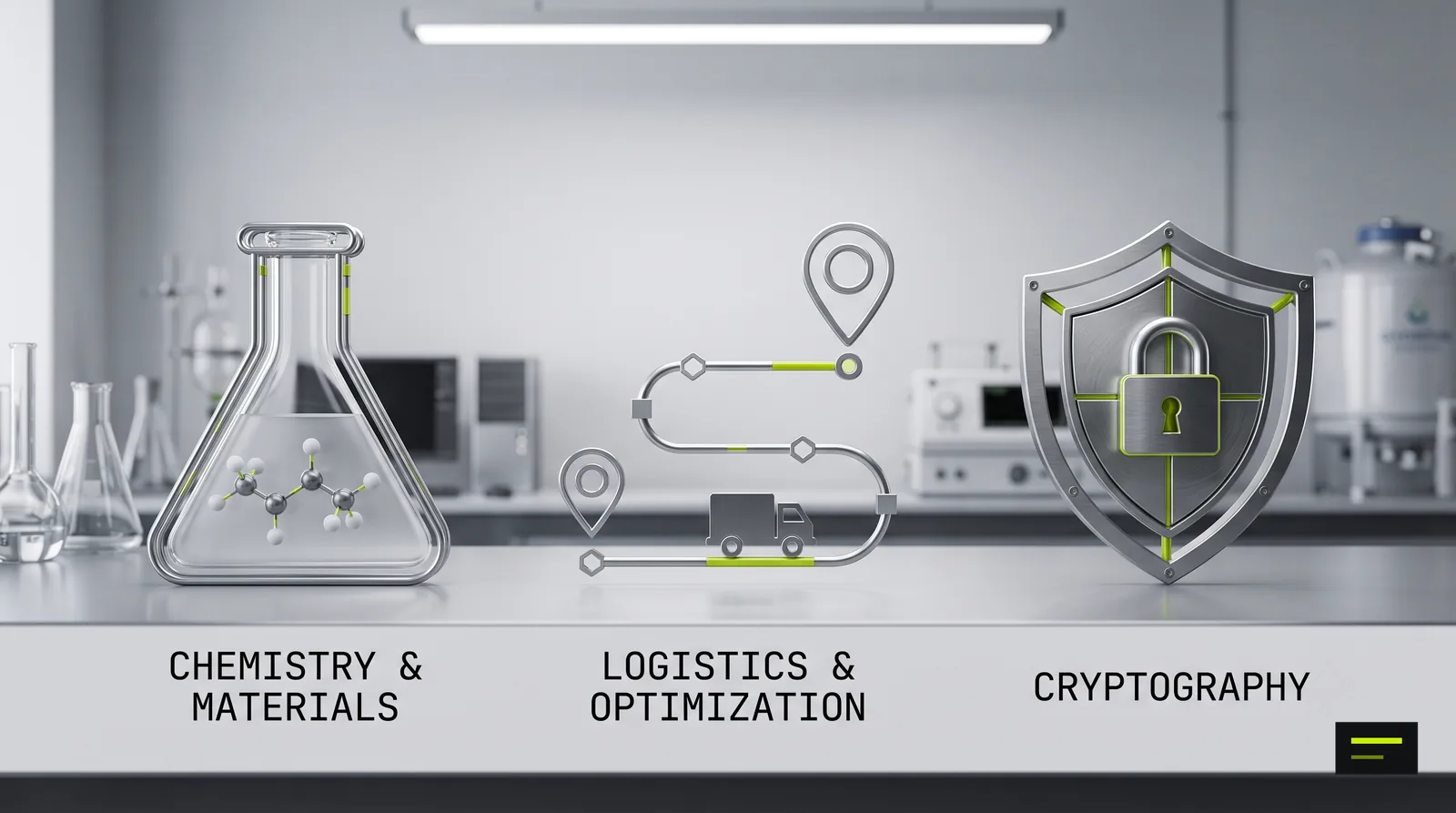
Today, quantum computers are used mostly for research and early pilot projects, concentrated in three areas: simulating molecules and materials, optimization, and cryptography. Almost none of it is production use yet, and being clear about that stage is more useful than the hype.
This article goes through each area, what has actually been shown, and what is still a promise. It ends with a short checklist for reading quantum headlines, because that turns out to be the most useful skill of all.
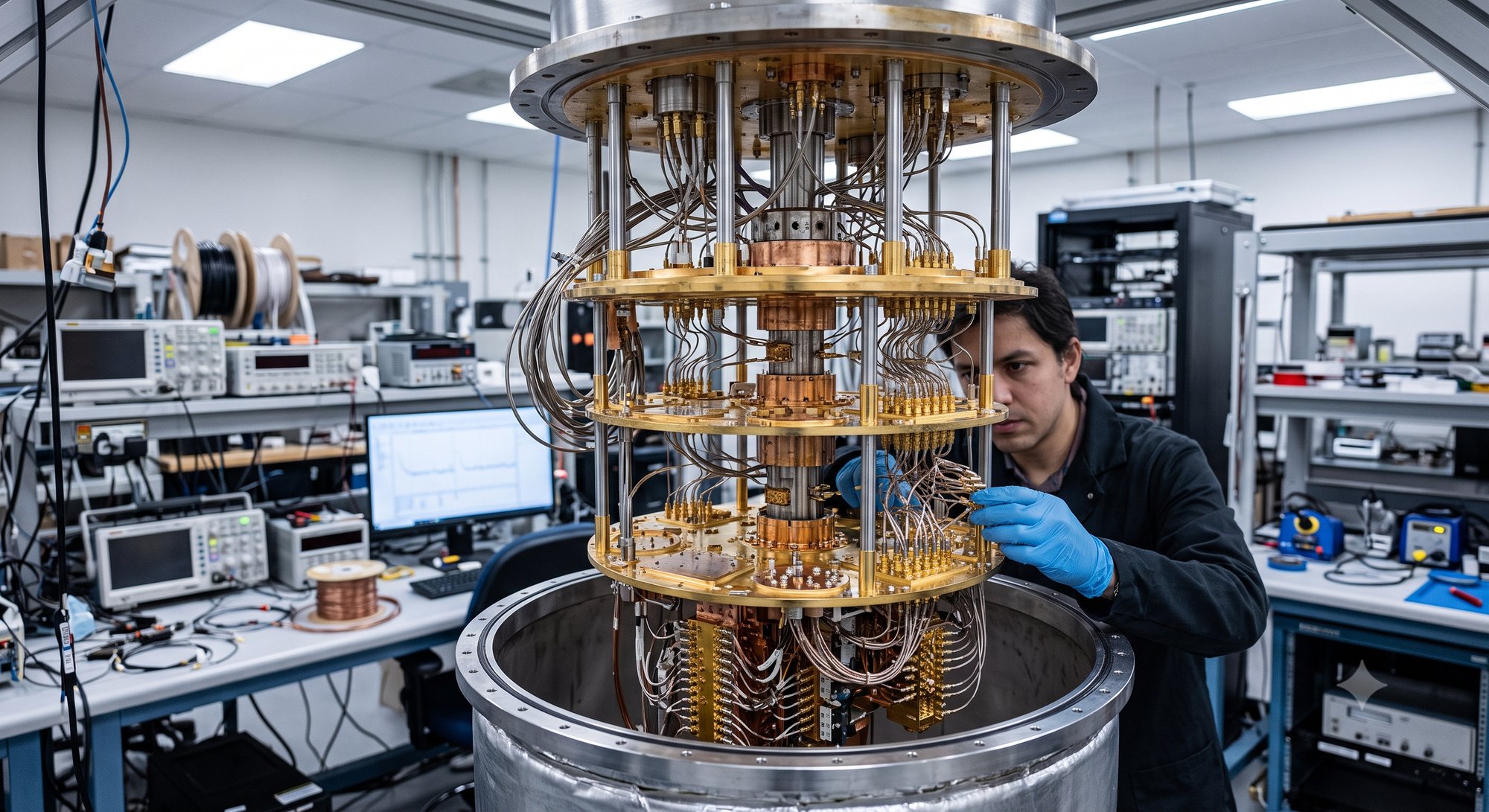
Chemistry and materials simulation
This is the application with the clearest theoretical case, and it is the original reason quantum computing was proposed. Molecules and materials are quantum systems, and the cost of modeling them exactly on a classical computer grows explosively with the number of electrons. A frequently cited target is FeMoco, the iron-molybdenum cofactor in the enzyme nitrogenase that fixes nitrogen for fertilizer. Pharmaceutical and materials companies run active research programs here. A demonstrated, verified commercial advantage over classical methods at useful scale has not been publicly established yet.
Optimization
Routing, scheduling and portfolio construction are heavily explored, and banks, logistics firms and industrial companies run pilot projects. Results so far are mixed and problem-specific. Classical algorithms remain competitive or better on most real instances tested publicly. Quantum annealing, sold by D-Wave, is a different approach from the gate-based machines discussed elsewhere on this site, and it is judged by the same standard: does it beat the best classical solver on the same problem?
Cryptography, on both sides
Cryptography cuts both ways. Shor's algorithm is why governments and standards bodies are pushing organizations toward post-quantum cryptography now, years before a machine that can run it at scale is expected to exist. In August 2024 NIST released its first three finalized post-quantum standards (FIPS 203, 204 and 205) so systems can migrate early, partly because data stolen today could be decrypted later. Separately, quantum key distribution is being piloted as a physically different way to detect eavesdropping on sensitive links.
Machine learning and finance
Both are active research areas and both are early. Large banks run quantum research programs on portfolio optimization and risk modeling, and quantum machine learning is an open question, covered honestly in the data scientist pathway. None of it is expected to run on today's hardware at useful scale.
How to read a quantum headline
- What size was the problem? A result on a handful of qubits, or a simulated one, says little about real-world scale.
- Compared against what? The fair baseline is the best classical method, not a naive one.
- Where is the source? A peer-reviewed paper or a preprint you can read beats a press release.
The honest summary is that quantum computing today looks closer to classical computing's research-lab era than to a mature technology. That is not a reason to dismiss it. The physics and the proven speedups are real, and the algorithms behind them are well understood. But any claim that a quantum computer already solves a real business problem better than classical methods deserves a source, not just a headline.
Frequently asked questions
Are quantum computers being used in real businesses today?
Mostly in pilots and research. Banks, pharmaceutical companies and industrial firms run experiments, often through cloud access. There is no widely accepted case yet where a quantum computer beats the best classical method on a commercially useful task.
Can quantum computers help discover new drugs?
Potentially, through simulating molecules more accurately than classical methods can. That is the most promising application, but it needs larger and more reliable machines than exist today. Current work is mainly research toward that goal.
Will quantum computers break Bitcoin and online banking?
In principle, a large fault-tolerant quantum computer running Shor's algorithm could break the signature schemes and key exchange most systems use today. No such machine exists. Hash functions such as SHA-256 are far less affected, and the switch to post-quantum standards has already started.
Which industries will benefit first?
Chemistry and materials, including pharmaceuticals and energy, have the strongest case, followed by finance and logistics for optimization. Security is affected either way, because organizations need to prepare for quantum-safe encryption.
Can I use a quantum computer myself?
Yes. IBM's free Open Plan gives up to 10 minutes of real quantum hardware time per rolling 28 days, and several clouds offer free simulators. You can also build circuits in this site's Circuit Builder with no account.
Quantum States is Quantum Discord's free introductory course. It builds the foundation every application above rests on, with a live workshop and interactive simulations.
Explore the Quantum States courseSee how these ideas run under the hood in the Simulations gallery.
- NIST, first three finalized post-quantum encryption standards, Aug 2024. www.nist.gov/news-events/news/2024/08/nist-releases-first-3-finalized-post-quantum-encryption-standards
- M. Reiher et al., "Elucidating reaction mechanisms on quantum computers," PNAS, 2017. www.pnas.org/doi/10.1073/pnas.1619152114
- IBM Quantum documentation, plans overview (Open Plan). quantum.cloud.ibm.com/docs/en/guides/plans-overview